

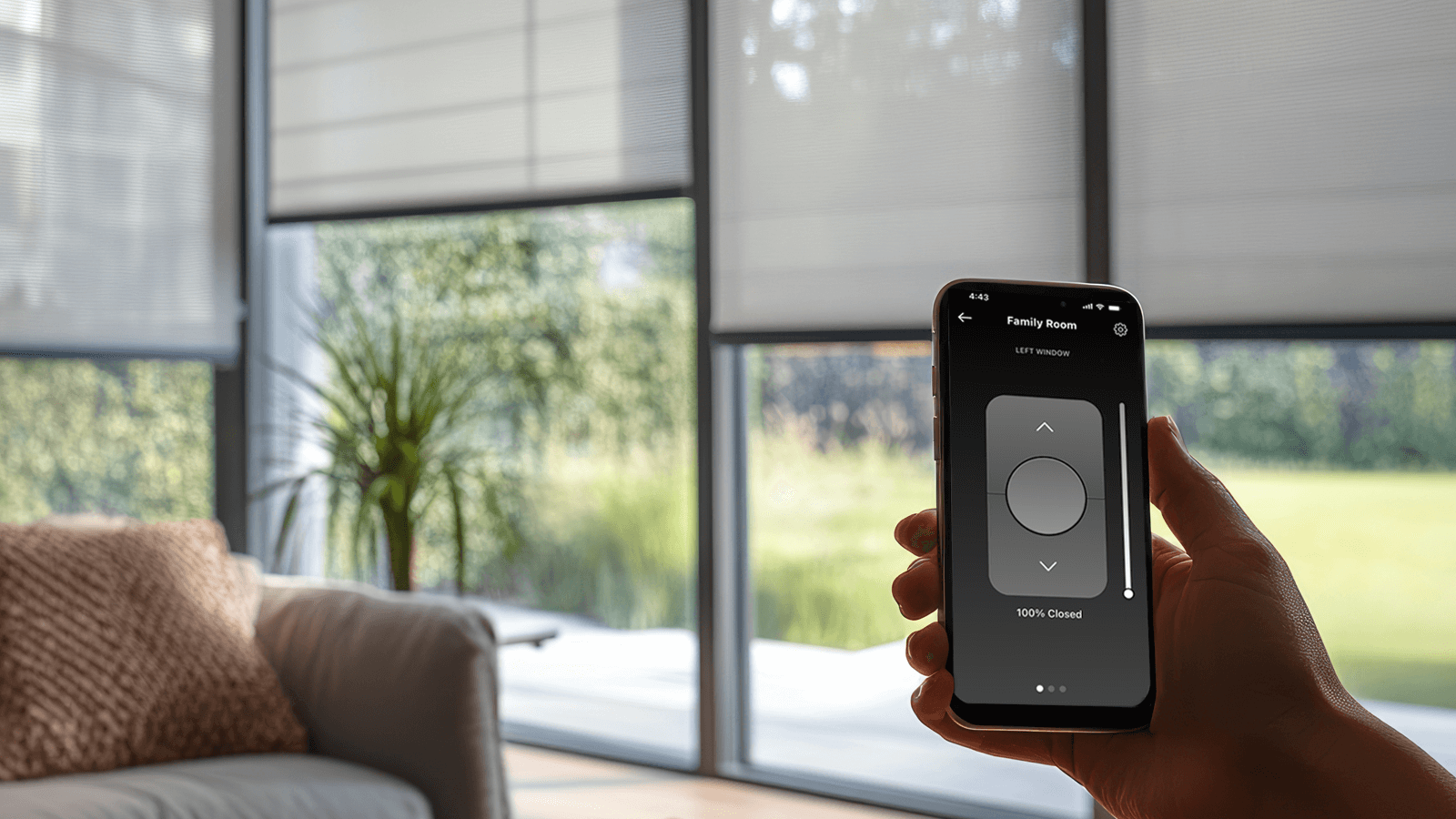
Modern smart home technology should feel invisible—devices work when you need them, stay out of the way when you don’t, and keep improving over time.
Mado Dynamic C-Series shades were designed with that philosophy in mind, which is why they are built on Matter and Thread.
This article explains what Matter and Thread are, how they work together, and why we integrated them into your Mado shades. You will learn:
- How the Matter standard allows devices from various brands to interact with and understand each other
- How the Thread Network carries messages between devices in a reliably, and why its ideal for the job
- The classifications for devices on a Thread network: end devices, routers and border routers.
What Is Matter?
Matter is an industry-wide smart-home standard created by the Connectivity Standards Alliance (CSA). Its purpose is simple: make smart devices work reliably across ecosystems.
In practical terms, Matter allows one device to be used with platforms like Apple Home, Google Home, Amazon Alexa, and Samsung SmartThings—without being locked into just one.
What Matter does for you
- Simplified setup – consistent onboarding across apps
- Local control – your shades continue working even if the internet is down
- Multi-admin support – one device can be shared across multiple ecosystems
- Future-proof – devices remain compatible as platforms evolve
Think of Matter as a common language that all smart-home platforms understand.
Learn more:
Connectivity Standards Alliance – Matter Overview
What Is Thread?
If Matter is the language, Thread is the network that carries those messages.
Thread is a low-power, IP-based mesh networking protocol designed specifically for smart-home devices.
Why Thread is ideal for window shades
- Excellent reliability near windows and exterior walls
- Low energy usage (critical for battery-powered devices)
- No Wi-Fi congestion
- Self-healing mesh - devices automatically reroute messages if something goes offline
Thread is maintained by the Thread Group, with broad support from Apple, Google, Amazon, and others.
Learn more:
Thread Group – What Is Thread?
Matter over Thread: Why Mado Uses Both
Smart-home devices using Matter can communicate over several transports (Wi-Fi, Ethernet, or Thread).
Mado Dynamic shades use Matter over Thread, combining:
- Matter’s cross-platform compatibility
- Thread’s reliability and efficiency for low-power devices
This means your shades:
- Respond quickly
- Keep schedules running locally
- Scale easily as you add more rooms

Image Courtesy: Thread Group
How a Typical Thread Home Network Works
A Thread network builds itself automatically as devices are added. You don’t need to configure it manually.
1. End Devices (Your Mado Shades)
End Devices perform tasks but do not relay messages for others.
Examples:
- Mado Dynamic C-Series shades
- Motion sensors
- Battery-powered remotes
Characteristics:
- Ultra-low power
- Secure communication
- Long battery life
Analogy: End devices are passengers—they ride the network but don’t direct traffic.
2. Thread Routers (Network Extenders)
Thread Routers strengthen the mesh and pass messages between devices.
Typical examples:
- Thread-enabled smart plugs
- In-wall switches
- Always-powered lighting devices
Adding even one Thread router near your shades can significantly improve reliability.

Analogy: Routers are street intersections that keep traffic flowing smoothly.
3. Thread Border Routers (The Gateway)
Thread Border Routers connect the Thread mesh to your home’s IP network (Wi-Fi or Ethernet).
Common examples:
- Home hubs from Apple, Google, Amazon, or Samsung
- Certain Wi-Fi routers with built-in Thread support
Border routers enable:
- Control from your phone
- Remote access when you’re away
- Integration with Matter ecosystems

Image Courtesy: Thread Group
Analogy: Border routers are on-ramps between your smart devices and the rest of your home.
A Modern Advantage: Your Phone Helps Too
Many newer smartphones now include native Thread radios, including recent iPhone and Google Pixel models.
This allows your phone to participate directly during setup and diagnostics.
What this means for you
- Easier commissioning
- Faster troubleshooting
- Less dependence on dedicated hubs during installation
What This Means for Your Mado Dynamic Shades
By using Matter over Thread, your Mado shades deliver:
- Fast, responsive control
- Reliable automations and schedules
- Operation during internet outages
- Seamless expansion as your home grows
- Compatibility with today’s and tomorrow’s smart-home platforms
Mado shades are designed to blend naturally into the Thread network your home already has - or will build over time.
The Big Picture (In Plain Terms)
- Matter = compatibility and longevity
- Thread = reliability and efficiency
- End devices do the work
- Routers strengthen the mesh
- Border routers connect everything
- Modern phones make setup easier
You don’t need to design a smart-home network—Thread builds one for you.
Further Reading & Deep Dives
-
Connectivity Standards Alliance – Matter Specifications
-
Thread Group – Technical Overview
-
OpenThread (Google) – Border Router Architecture
- Thread-enabled Border Routers available as of Jan 2026
This guide is intended to help Mado Dynamic customers understand how Matter and Thread work together—and how these technologies ensure their shades continue to work with their smart-home network for years to come.

Share: