


 The European Solar Shading Organisation and Why Global Shading Day Exists
 Every year, the calendar fills up with awareness days. Some are meaningful. Some are marketing. Some are both.
March 21 is Global Shading Day, an initiative led by the European Solar Shading Organisation (ES-SO) to bring attention to something most people rarely think about: how sunlight enters our buildings, and what happens after it does.
“Shading,” in this context, does not mean aesthetics or interior design. It refers to the use of physical systems such as blinds, shades, exterior screens, and architectural elements to control how much solar energy enters a building through its windows. It is, fundamentally, about managing heat before it becomes a problem.
The choice of March 21 is deliberate. It is the spring equinox in the Northern Hemisphere, the point at which daylight and darkness are in balance and solar intensity begins to climb toward its annual peak. The day is meant to serve as a seasonal checkpoint. It is a reminder to think about how buildings will perform before the heat arrives, not after.
At first glance, it can feel like the kind of awareness day that sits somewhere between International Donut Day and National Pet Week. Easy to ignore. Easy to dismiss.
But Global Shading Day exists because something larger is happening, and most of our responses to it are incomplete.
Cooling Is the Real Story
Cooling is becoming one of the fastest-growing energy challenges in the world. The International Energy Agency projects that energy use for space cooling will more than double by 2050 if current trends continue. In the United States, air conditioning already accounts for about 19% of all electricity used in homes, according to the U.S. Energy Information Administration. That is not a marginal load. It is a structural one.
And yet, most of the way we think about cooling is reactive. When buildings get hot, we add more air conditioning. When temperatures rise, we increase capacity. We are scaling the response rather than addressing the cause.
To understand the cause, it helps to look at where the heat is coming from.
The Problem Starts at the Window
Windows are one of the weakest points in the building envelope. The U.S. Department of Energy notes that approximately 76% of the sunlight that falls on a standard double-pane window enters the home as heat. More broadly, heat gain and heat loss through windows account for roughly 25% to 30% of residential heating and cooling energy use. That means a significant portion of what we spend on comfort is driven not by behavior, but by how buildings handle solar exposure.
Once that heat is inside, mechanical systems take over. Air conditioning lowers the temperature, but it does so after the load has already been created. By that point, the system is compensating rather than preventing.
Why Shading Changes the Equation
Shading operates at a different point in that sequence. Instead of reacting to heat, it reduces the amount of solar energy that enters in the first place. It is a small shift in timing, but a meaningful one in outcome.
The impact of that shift is not theoretical. The International Energy Agency has noted that passive measures such as shading and insulation can reduce cooling demand by up to 80% in certain conditions. The United Nations Environment Programme reports that passive cooling strategies can lower indoor temperatures by as much as 8°C and reduce cooling energy use by 15% to 55%. At the level of individual products, the U.S. Department of Energy finds that well-designed cellular shades can reduce solar heat gain through windows by up to 60%, with whole-home cooling savings often in the range of 15% to 25% when used effectively.

Taken together, these are not incremental improvements. They point to a category of solutions that act early, scale broadly, and compound over time.
The Real Barrier Is Adoption
Which raises a natural question: if shading is this effective, why has it not been treated as a standard part of how we manage energy and comfort?
The answer is less about awareness and more about friction. And the friction is not subtle. It shows up at every step of the process.
For most homeowners, upgrading window coverings has historically meant navigating a system that assumes time, expertise, and tolerance for complexity. What appears to be a simple purchase often unfolds into a series of decisions and risks:
-
Measurement risk — Accuracy matters, but guidance is inconsistent. A mistake of even a fraction of an inch can render a product unusable.
-
Custom ordering and lead times — Products are often made to order, with timelines that stretch into weeks and limited flexibility once placed.
-
Opaque pricing — Costs vary widely based on configuration, materials, and installation, making it difficult to predict the true investment upfront.
-
Installation complexity — Tools are required. Instructions can be unclear. Mounting systems vary. The perceived risk of doing it wrong often leads to professional installation, adding cost and coordination.
-
Inconsistent usability over time — Products may not operate smoothly. Adjustments may be needed. Shades that are difficult to use tend to be left in a single position, reducing both comfort and energy performance.
Individually, each of these issues is manageable. Together, they create a system where many people choose not to act at all.
This is why energy efficiency often fails to scale. Not because the solutions are ineffective, but because they are inconvenient.
If shading is going to play a meaningful role in reducing cooling demand, the category has to evolve from a project to a product. It has to become something that can be selected, installed, and used with confidence by a broad set of people, not just those willing to navigate complexity.
Mado’s approach is grounded in that shift. The goal is not simply to improve performance, but to remove the barriers that prevent performance from being realized in the first place. That means simplifying measurement, reducing installation friction, standardizing how products work, and making outcomes more predictable.
Because the reality is straightforward. A product that saves energy but is rarely installed has limited impact. A product that is easy to adopt and used consistently can change how homes perform at scale.
Why We Joined ES-SO
This is part of the reason Mado Dynamic has joined the European Solar Shading Organisation as its first U.S.-based company member. In many European markets, shading has long been treated as part of building performance rather than purely as an interior choice. It is integrated into how buildings are designed, evaluated, and improved. The conversation starts earlier, and the expectations are different.
Global Shading Day is an extension of that perspective. It is an attempt to shift how shading is understood. It is not an optional upgrade, but a first step in managing light, heat, and energy use. It encourages a move away from purely reactive systems toward a more preventative approach to comfort.
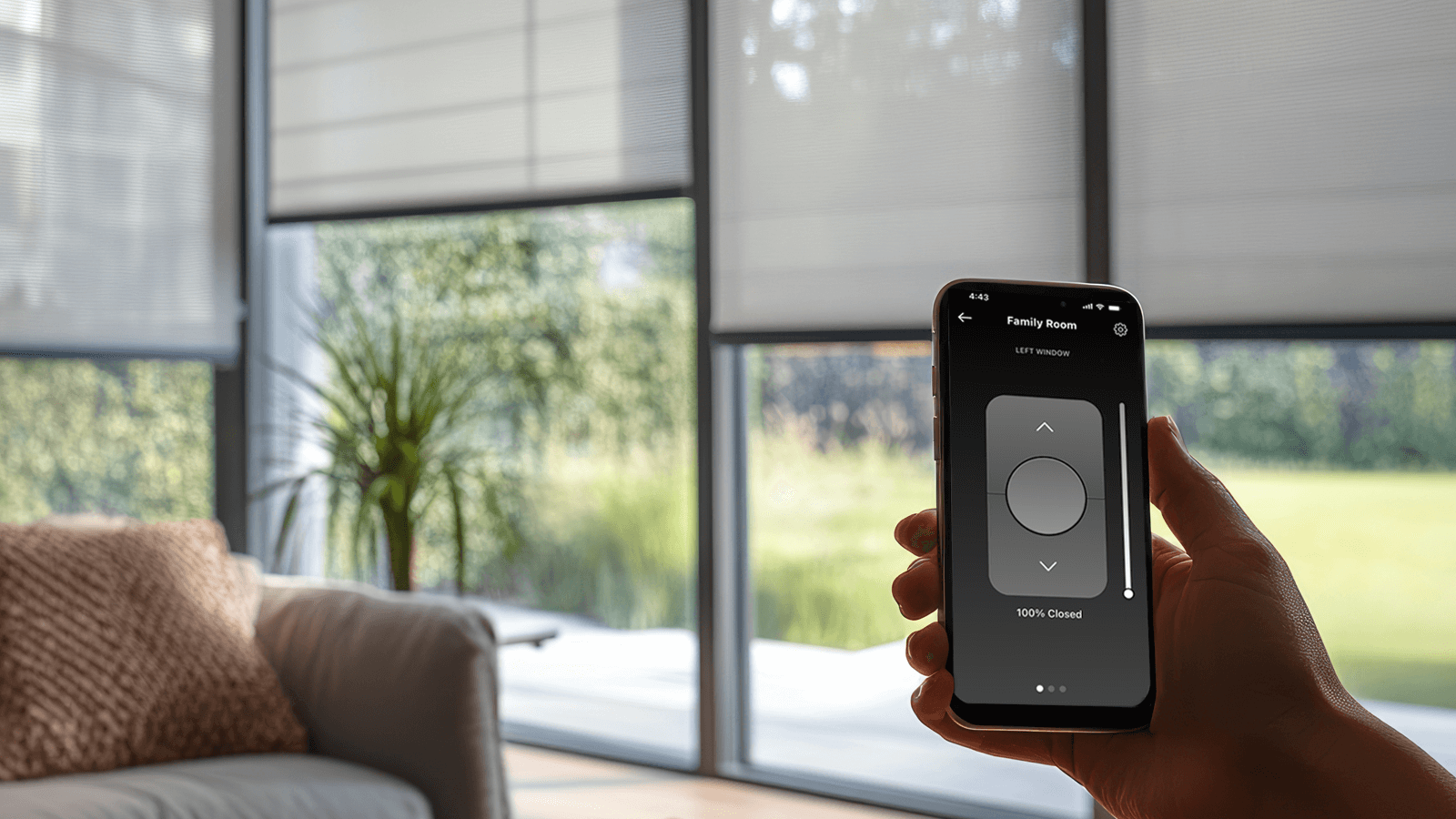
For Mado, the relevance of that shift is practical. The company operates in a category where the gap between potential and adoption has been shaped by usability. The core idea is straightforward. If shading is going to scale, it must be easy to measure, easy to install, and consistent in how it works. Not because simplicity is a design preference, but because it is a requirement for widespread use.
A Practical Step Forward
As cooling demand continues to grow, the limitations of a purely reactive approach become more visible. Expanding mechanical capacity alone is unlikely to be sufficient, either from an energy perspective or from the standpoint of grid stability. What is needed is a broader mix of solutions, including those that reduce demand before it appears.
Shading does not solve the entire problem. But it addresses a specific and important part of it, and it does so immediately.
Global Shading Day is, in that sense, less about celebration than about recalibration. It is a reminder that some of the most effective tools we have are already available, but not yet fully utilized. It asks a simple question at the right time of year: before the heat arrives, what can be done to prevent it?
The answer, in many cases, starts at the window.
Share: